Building a Stronger Safety Culture: Lessons from AGC’s January Safety Forum
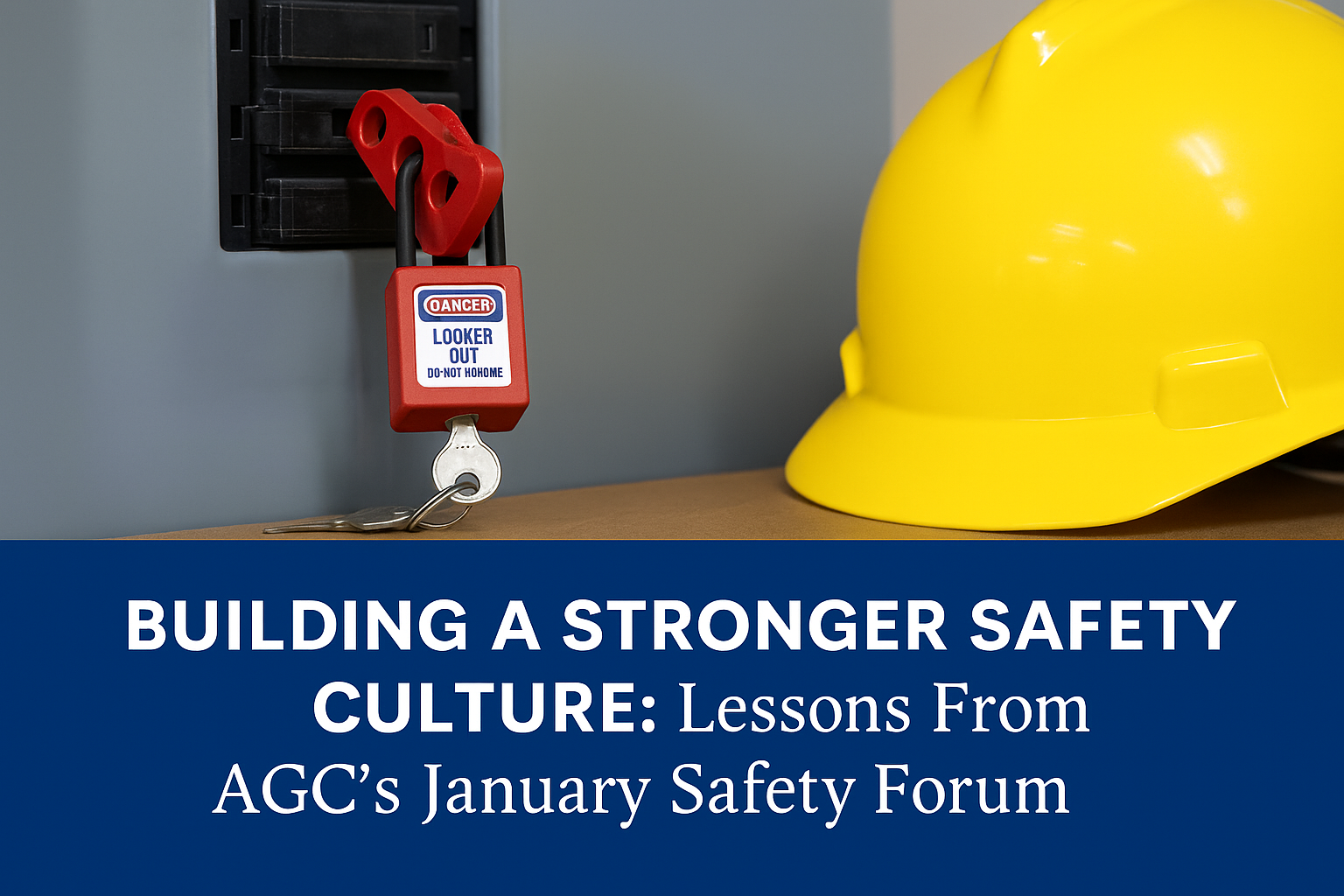
Last week I attended the AGC of Minnesota Safety Forum, where contractors, safety leaders, and industry experts met to discuss emerging risks, best practices, and the evolving challenges facing construction safety in 2026. The featured presentation, led by Hunt Electric, focused on Lockout/Tagout (LOTO)—one of the most essential yet frequently misunderstood safety systems on a jobsite.
Across the forum, one message stood out clearly: today’s jobsite environments are more complex than ever. With new technologies, evolving OSHA standards, and increasing interdependency between trades, effective safety systems must be proactive, structured, and consistent. Here are the most important insights from the session.
1. LOTO Is Foundational—and Must Be Done Right Every Time
Hunt Electric’s Safety Managers, Ron Kuehn and Kyle Casey, walked through the fundamentals of a strong LOTO program. Their core message: LOTO only protects workers when every step is followed—no shortcuts, no assumptions. The essential LOTO stages they reinforced included preparation, communication, equipment shutdown, lock application, full verification using the Live–Dead–Live method, and controlled re‑energizing. They emphasized seven critical questions every worker should ask before applying LOTO, including whether they know all energy sources feeding the equipment, where locks must be applied, and if they can demonstrate the system is truly de‑energized. These simple questions dramatically reduce risk and drive consistency.
2. Authorized vs. Affected Employees: Clarity Matters
Many incidents occur because companies blur the lines between “authorized” and “affected” employees. Hunt Electric broke this down clearly. Authorized employees are specially trained, assigned LOTO locks, and permitted to apply or remove energy‑isolation devices. Affected employees work around the equipment but cannot remove locks or tags and must be trained to recognize when LOTO is underway. Properly defining and communicating these roles prevents confusion and makes LOTO more reliable.
3. Complex LOTO Is Increasing Across the Industry
As buildings, systems, and construction technology become more sophisticated, complex LOTO is becoming far more common. Projects today often involve multiple power feeds, overlapping trades, stored energy conditions, or sequencing requirements. Hunt Electric shared documentation, examples of group lock boxes, and site‑specific LOTO plans created through KPA Flex. Their message was straightforward: if your LOTO program hasn’t evolved to account for today’s complexity, it’s time to update it.
4. Accountability and Communication Prevent Incidents
AGC highlighted a consistent trend: most preventable incidents come down to communication failures. Common issues included skipping Live–Dead–Live verification, removing hardware too early, leaving exposed wires, assuming another crew completed a task, or failing to apply locks for each authorized worker. Accountability practices like Gemba walks, incident role‑play, and quick detailed reporting all help reinforce learning and prevent repeat events. When accountability is built into daily operations, crews work more intentionally and safely.
5. AGC Resources and Training Opportunities for 2026
The forum also outlined key training and development opportunities available this year. MNOSHA’s Construction Seminar on electrical hazard awareness will focus on temporary power and hazard recognition. AGC’s Principles of Occupational Safety & Health (POSH) course—a comprehensive four‑day program—offers deep training on OSHA fundamentals, incident investigation, JSAs, inspections, industrial hygiene, and more. The STCKY Academy returns in February with strategies to address “Stuff That Can Kill You,” and the 2026 Minnesota Construction Summit will bring together industry leaders for two days of keynotes, training, and innovation. These events give contractors practical tools to strengthen their safety programs and develop emerging leaders.
Final Thought: Safety Is a System, Not a Switch
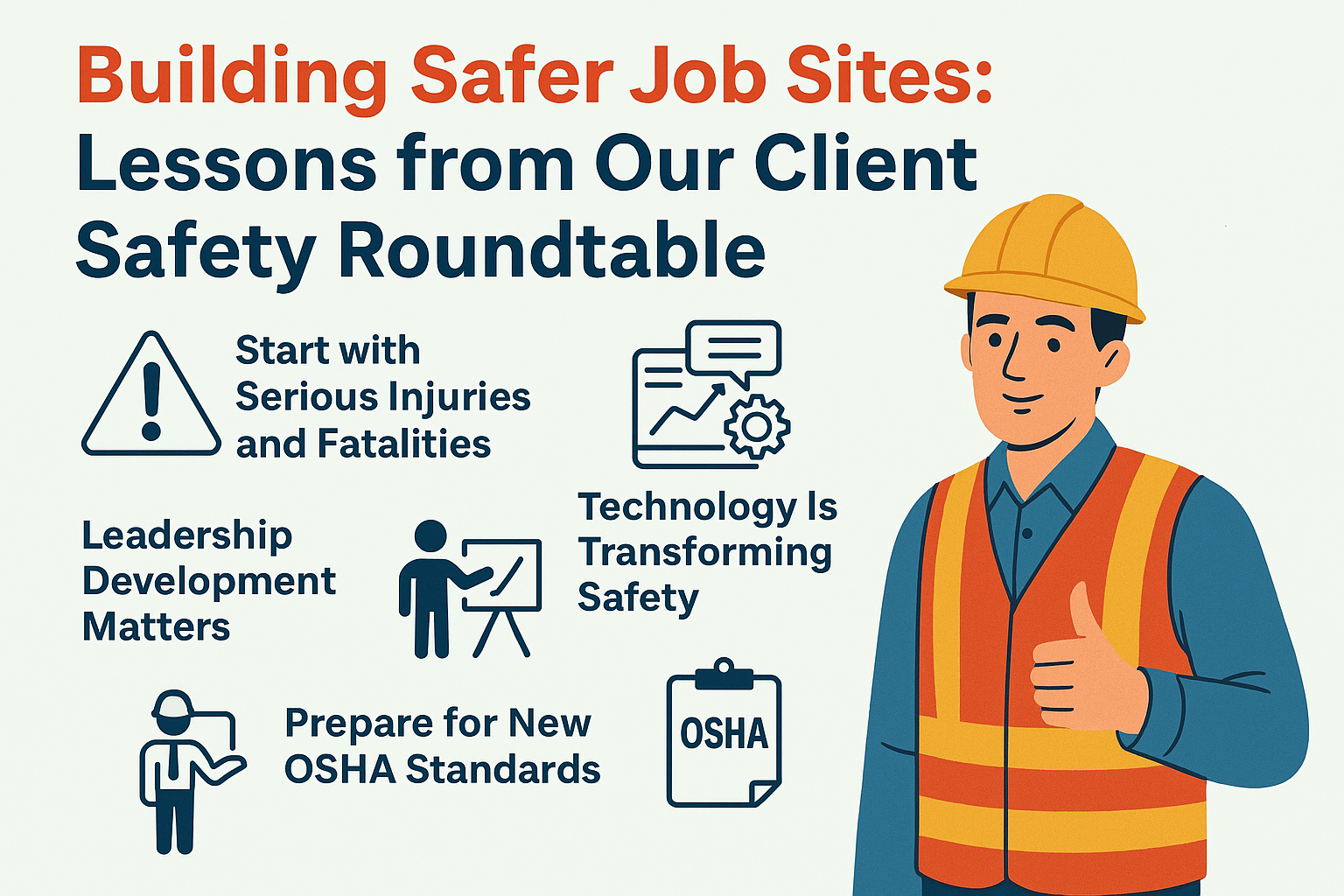
Whether discussing LOTO, leadership development, or OSHA updates, one universal theme emerged throughout the forum: safety requires proactive communication, disciplined execution, and strong leadership at every level. Technology continues to accelerate, and tools are improving, but nothing replaces clear expectations, intentional planning, and accountability across teams. If your company hasn’t revisited key safety systems like LOTO, authorized‑employee training, or communication practices recently, now is the time. Our Risk & Safety team is here to help with assessments, program development, and training to support your safety goals in 2026 and beyond.