Building Safer Job Sites: Lessons from Our Client Safety Roundtable
Every month, our risk and safety team hosts a roundtable with clients to share what’s working—and what’s not—on job sites. These conversations are invaluable because they uncover practical strategies that improve safety culture and reduce risk. Here are the most impactful insights from our latest session:
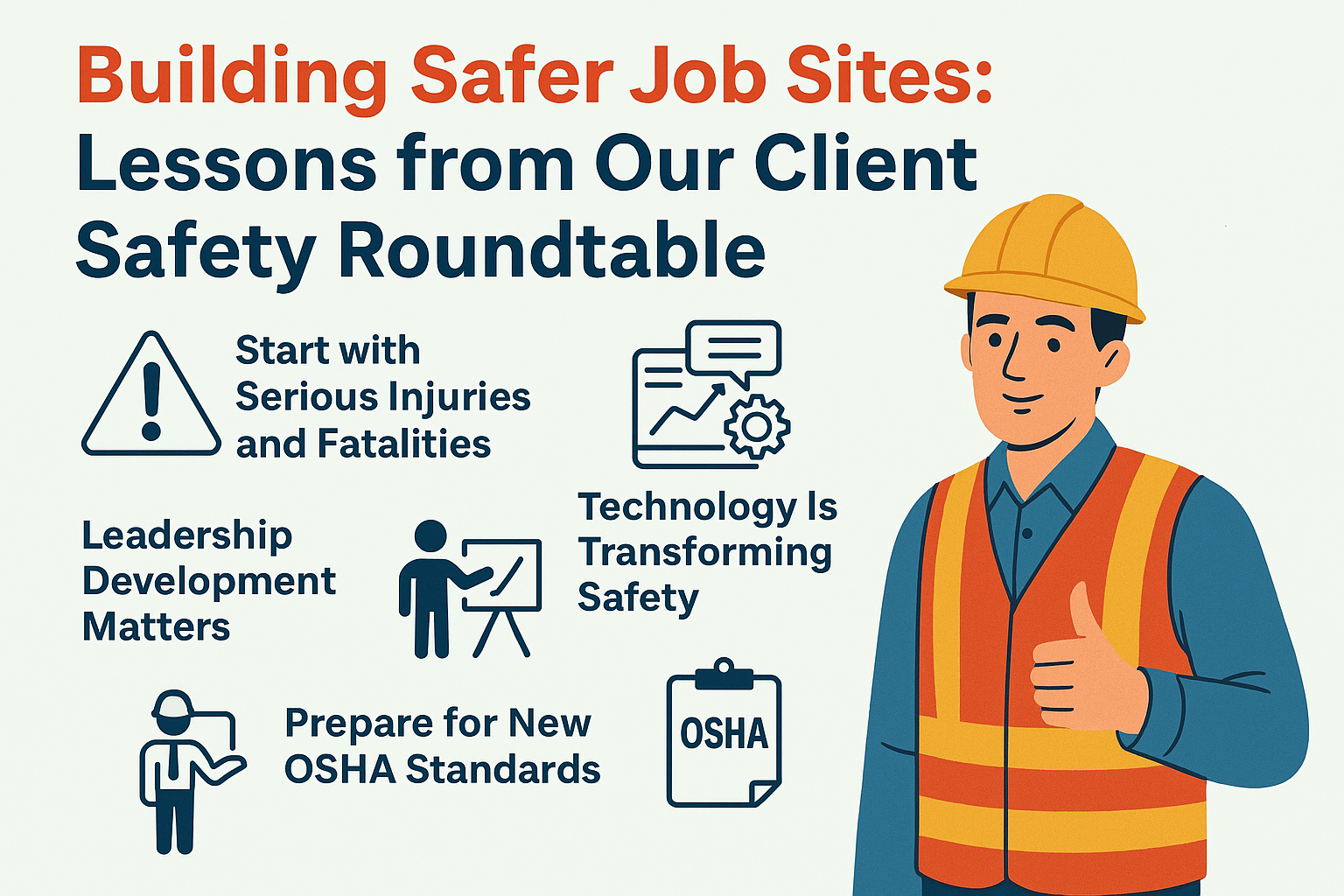
- Start with Serious Injuries and Fatalities (SIF)
One clear takeaway: focus on preventing serious injuries and fatalities first. Industry research shows that when leadership prioritizes SIF risks, overall safety performance improves. This approach sets the tone for a proactive safety culture.
- Technology Is Transforming Safety
AI-powered tools are changing the game:
- Platforms can now identify hazards from photos and even generate toolbox talks.
- Digital systems like 811 Spotter help manage utility tickets and flag missing data, reducing strike risks.
- Communication tools that connect the office and field improve planning and reduce last-minute “shoot from the hip” decisions.
- Leadership Development Matters
Promoting someone just because they’ve “been around” doesn’t work. Instead:
- Find individuals with the right attitude and train them.
- Use programs like AGC Leadership Academies or union-led initiatives.
- Schedule follow-ups after leadership training to sustain progress.
- Host monthly field leader meetings and mid-season check-ins to keep accountability strong.
- Accountability Drives Results
One client shared a powerful example: when crews come to the office after a utility hit involving equipment over $1,000, incidents dropped significantly. Why? It forces everyone to understand why it happened and take ownership.
Other proven strategies:
- Gemba walks to role-play incidents and clarify root causes.
- Detailed reporting for claims—takes only 10 minutes and gets buy-in from the field.
- Visual documentation (photos, videos) of utility hits and repairs to track costs and prevent repeat mistakes.
- Hire for Safety
Former public workers and military veterans often excel in safety roles thanks to their discipline and leadership skills. Resources like Hiring Our Heroes and Eagles Group can help you find candidates with the right mindset.
- Prepare for New OSHA Standards
The OSHA heat standard is coming soon. Start planning now to ensure compliance and protect your crews from heat-related illnesses.
- Communication Is Key
Simple conversations matter. Leaders need to understand the weight of their decisions and communicate clearly. Digital tools that allow the office to assign tasks and share plans with the field bridge gaps and reduce risk.
Final Thought
Safety isn’t just about rules—it’s about leadership, accountability, and continuous improvement. By leveraging technology, investing in people, and fostering open communication, we can create safer job sites and stronger businesses.
What strategies have worked for your team? Share your thoughts in the comments or reach out—we’d love to keep the conversation going.