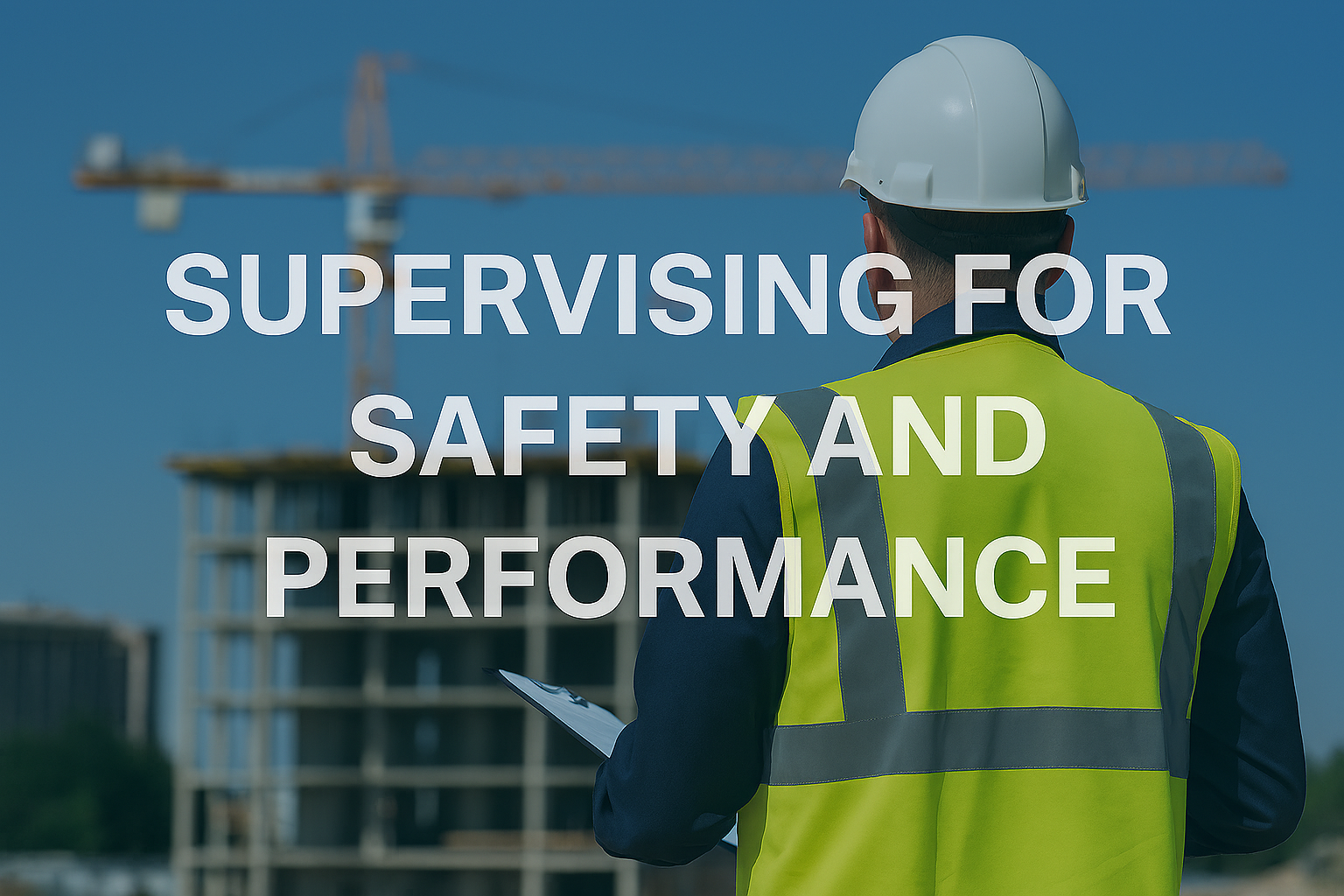
Supervising for Safety and Performance: Why Leadership on the Jobsite Matters More Than Ever
Hosted by Rob Dahl, VP of Construction Risk & Safety, Holmes Murphy Construction
In construction, safety isn’t just a compliance checkbox, it’s a culture. And the person who sets that tone every day isn’t sitting in a corporate office; it’s the supervisor leading the crew. During our recent webinar, “Supervising for Safety and Performance Management,” Rob Dahl emphasized a critical truth: the most powerful influence on jobsite safety and productivity isn’t a policy, it’s the person in charge of the work.
Why Supervisors Are the Game-Changers
When supervisors view safety as “the safety department’s job,” accountability fades and risk rises. The reality is that supervisors make hundreds of decisions daily, how tasks are assigned, how hazards are addressed, how feedback is given. These choices directly impact:
- Employee behavior and morale
- Incident frequency and severity
- Insurance claims and premium costs
- Overall project performance and profitability
For smaller contractors without a dedicated safety manager, this leadership role becomes even more critical. Success depends on whether supervisors lead safety because they believe in it, not just because someone is watching.
The Cost of Weak Safety Leadership
Consider two scenarios:
- Scenario A: A supervisor ignores PPE compliance because “it slows the job down.” Within weeks, a minor injury escalates into a costly claim, driving up premiums and damaging the company’s reputation.
- Scenario B: A supervisor starts every shift with a quick safety huddle, reinforces expectations, and addresses hazards immediately. Result? Fewer incidents, stronger crew trust, and better productivity.
The difference isn’t policy, it’s leadership.
Key Barriers to Ownership
Rob highlighted common obstacles that prevent supervisors from fully embracing safety leadership:
- Time Pressure: “We’re behind schedule” often trumps “We need to do this safely.”
- Lack of Training: Supervisors may know how to build but not how to lead.
- Cultural Norms: If safety feels like an add-on instead of a core value, it gets sidelined.
Strategies That Work
Here are practical steps supervisors can implement immediately:
- Set Clear Expectations: Make safety non-negotiable and communicate it daily.
- Lead by Example: If you wear PPE and follow protocols, your crew will too.
- Provide Constructive Feedback: Correct unsafe behavior in real time, positively and consistently.
- Document and Reinforce: Use quick checklists and recognition programs to keep safety top of mind.
- Engage in Continuous Learning: Supervisors should seek training on leadership and risk management, not just technical skills.
The Business Case for Safety Leadership
Strong supervisory leadership doesn’t just prevent injuries, it protects margins. Fewer claims mean lower premiums, less downtime, and stronger client confidence. As Rob Dahl put it:
“Safety leadership isn’t about compliance, it’s about culture. Supervisors set the tone every day.”
Next Steps
Want to strengthen your supervisory practices? Holmes Murphy’s Construction Risk & Safety team offers resources, training, and consulting to help you build a culture where safety drives performance.